
Albemarle Released Booking Photos
A booking photograph is created during an arrest or intake episode. Virginia law authorizes law enforcement to take arrest photographs in circumstances listed in Va. Code §19.2-392. That authority does not require ACRJ to place each image online. It also does not make every photograph available without review.
ACRJ’s release record and booking image answer separate questions. The photograph helps connect an identity to intake. The booking-and-release record can show the booking date, exit date and time, and recorded disposition. The court file shows the charge and legal result. None should be substituted for the others. Release from ACRJ may mean return to the community or transfer to VADOC, another jail, federal custody, or immigration custody.
Virginia’s law-enforcement-record rules allow withholding and redaction in defined situations. Victim-identifying images have added protection, and sealed or expunged material can be restricted. The accurate description is that a booking image may be requested for custodian review, not that every Albemarle mugshot is automatically public.
Where Albemarle Released Mugshots Appear
No single source covers every person released from Albemarle custody. The right channel follows the booking authority and the person’s later custody track. A local ACRJ episode belongs with ACRJ Records. A state-responsible episode may require VADOC. Registry and news images apply only in narrow settings and cannot establish current release status.
| Channel | Photo? | Access and limit |
|---|---|---|
| ACRJ website or recent-release feed | No public gallery found | The jail links to VINE and does not host a native photo roster. |
| ACRJ or sheriff mobile app | No official public app found | Communication and account apps are not mugshot lookup tools. |
| ACRJ records request | Possible | Ask for the intake photo tied to one booking; access is reviewed. |
| VADOC records | Possible | Inspect the live locator before assuming an image; inactive records have a form route. |
| Virginia Jail VINE | Not promised | Use it for person-specific custody events, not as a photo archive. |
| Virginia sex-offender registry | Yes for covered registrants | Official but limited to people with a legal registration duty. |
| News or press coverage | Sometimes | A time-bound report may use an old image and does not prove present status. |
Commercial mugshot and data-aggregation pages may copy old photographs without later dispositions or status changes. They are not linked or endorsed. An official booking record, court result, and current custodian record are safer sources for verification.
No Albemarle Mugshot Gallery
ACRJ’s official site has no native public name-search roster, 24-hour release table, 72-hour release table, or booking-photo gallery in the reviewed channels. Its “Inmate Locator” goes to Virginia Jail VINE. VINE is a person-specific custody and notification tool. It is not an ACRJ photo archive and does not certify a complete rolling list of released people.
No official Albemarle sheriff or ACRJ public recent-release or mugshot app was found. SmartInmate/Smart Communications and Access Corrections are communication or account services, not public roster applications. Do not install one expecting a sheriff mugshot feed. The Albemarle release fallback uses VINE, the court case, and an ACRJ release-record request instead.
A name missing from VINE does not prove release. The record may have aged out of the display, been entered under different identifiers, transferred to another system, or become restricted. Ask for an affirmative release or transfer event.
Request an Albemarle Booking Photo
ACRJ directs Virginia Freedom of Information Act requests to its FOIA contact. A narrow written request is best. Identify the person, approximate booking date, and specific episode, then ask for the “booking/intake photograph associated with the booking.” Request the release record as a separate item if the exit date or disposition is also needed.
- Confirm that ACRJ was the booking facility rather than a VADOC institution or another jail.
- Provide the full name, a distinguishing identifier, and an approximate booking date.
- Ask for the existing intake photograph tied to that episode.
- Request electronic delivery and an advance cost estimate above a stated ceiling.
- Ask the custodian to cite the precise Code section for a withholding or redaction.
No fixed ACRJ booking-photo fee is published. Under Va. Code §2.2-3704, reasonable charges may reflect actual access, search, duplication, and supply costs. The public body generally gives an initial response within five working days, subject to the statute’s response choices and extensions. That is not a promise that an image will be produced in five days.
ACRJ FOIATheresa Schwab
160 Peregory Lane
Charlottesville, VA 22902
434-977-6981 ext. 268
foiarequests@acrj.org
ACRJ FOIA information
The official ACRJ accreditation and FOIA page supplies that request channel.
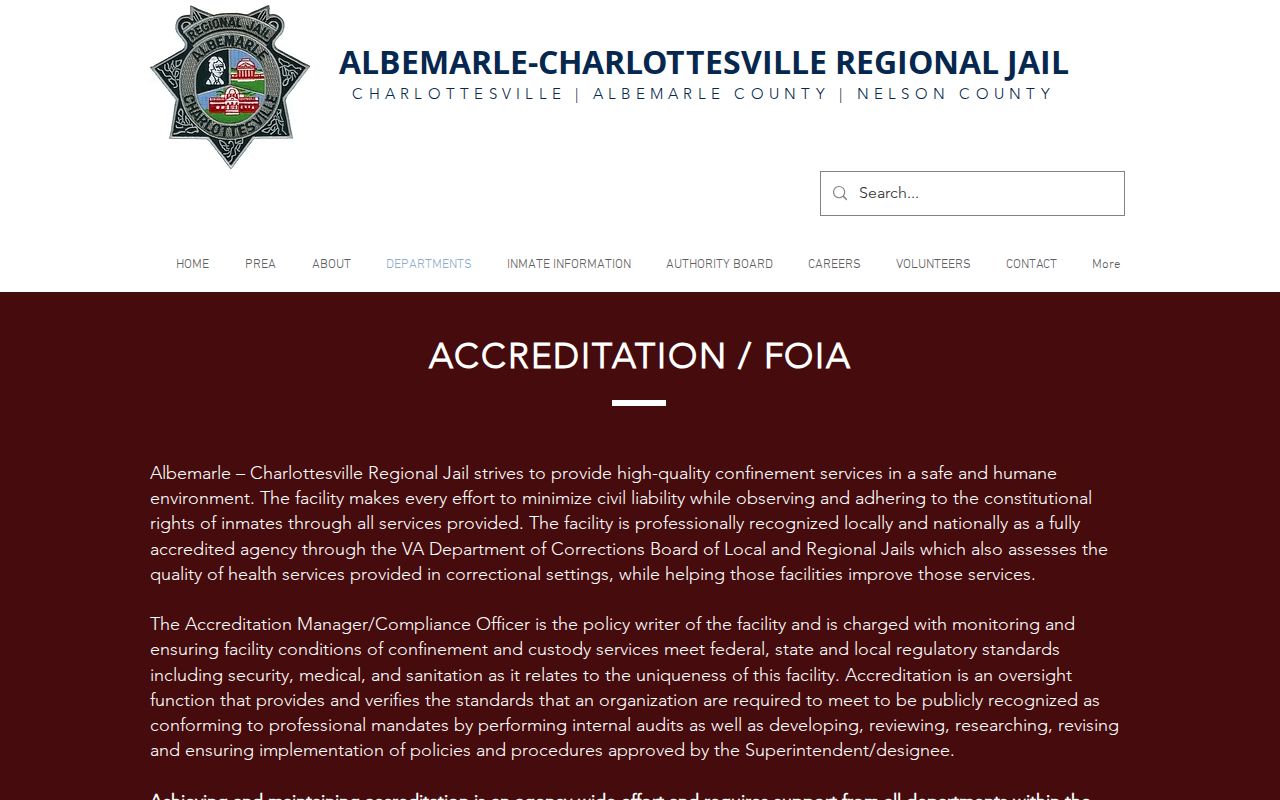
A focused request reduces mistaken identity and avoids asking the jail to create a record it does not maintain.
Virginia Images After Albemarle Release
A person who entered state legal custody follows the VADOC record path. The public locator may display identifying information for a state-responsible person, but its live interface must be checked before promising a photograph. For an inactive record, VADOC’s operating-procedure hub provides Form 17 for inactive inmate or CCAP probationer/parolee records and Form 14 for consent. That process is different from an ACRJ booking-photo request.
The Virginia Sex Offender and Crimes Against Minors Registry publishes a photograph for people who have a legal registration duty. It is not a general released-inmate list. An entry can show current registration and compliance information, but it cannot prove that every sentence or supervision term ended. Most people released from jail do not belong in this channel.
The official limited-purpose registry illustrates why its scope must remain narrow.
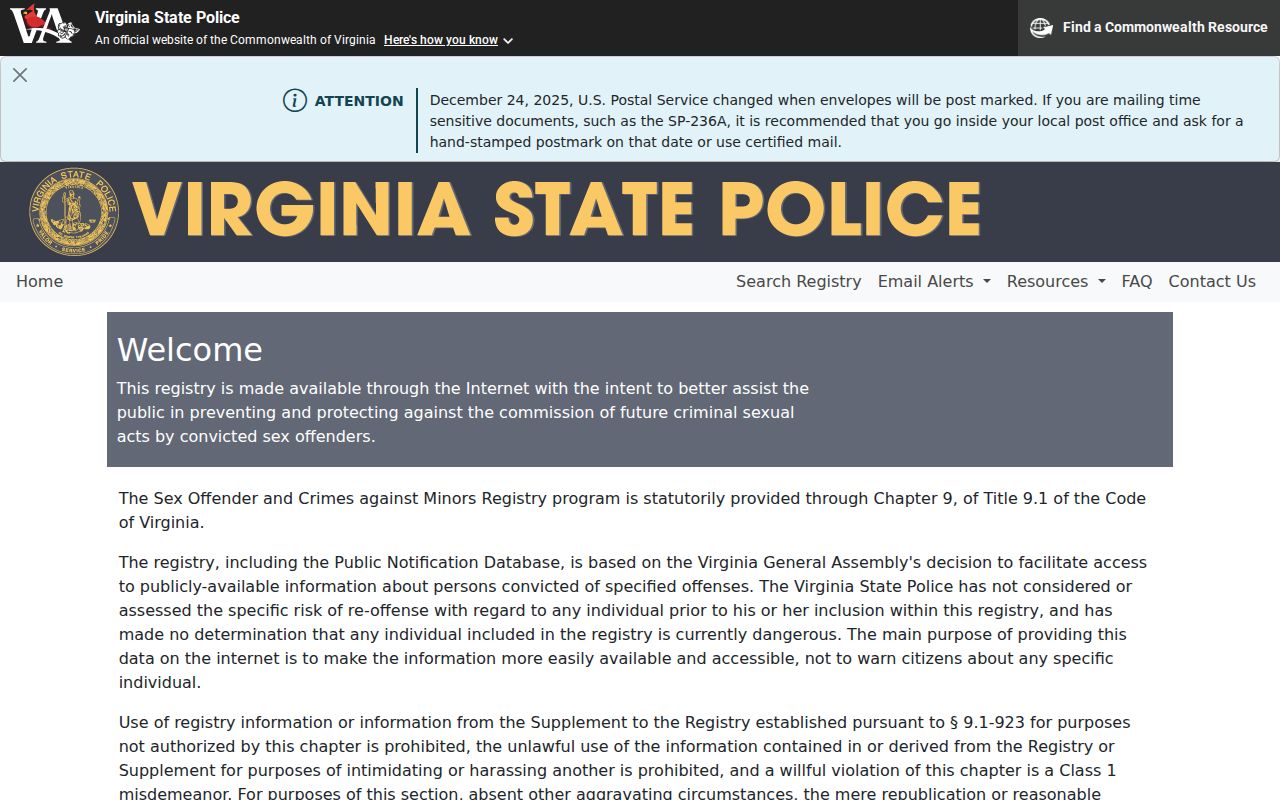
Use the image only in the context of the registry duty and confirm custody or supervision elsewhere.
Albemarle Mugshot Record Retention
Online absence and record retention are not the same. The Library of Virginia’s local and regional jail schedule lists inmate incarceration records, including booking sheets, photographs, pretrial-release documents, parole notices, and related release material, for three years after separation. A separate cumulative booking and release series has a 20-year retention period. Access still depends on the record series, exemptions, redactions, and whether the responsive item exists.
That distinction explains why an ACRJ image may be requestable even though no public gallery exists. It also explains why an old news image may outlast the agency’s ordinary record series. Ask for the specific episode while it is retained. Do not infer that a missing web image was destroyed, sealed, or expunged without confirmation from the custodian or court.
Albemarle News Photo Limits
ACRJ’s news area and local press may publish an incident image or an old booking photograph. Such reporting is tied to a date and event. It does not update itself when a charge is dismissed, a sentence ends, a record is sealed, or custody moves. Read the publication date and caption, then use the court and custodian for the current facts.
Third-party galleries can be worse. Common problems include copied images, stale custody labels, mistaken identity, omitted court outcomes, and fees tied to removal. Treat those pages only as unverified leads and do not send payment merely because an image appears. A photograph is not proof of conviction and does not show where the person is now.
For a released ACRJ person, the Albemarle release-record path joins the court order to the jail’s recorded exit. That evidence is more useful than an undated photo.
Virginia Mugshot Removal Rules
Virginia’s distinctive rule is not a blanket mugshot ban. Va. Code §8.01-40.3 creates civil consequences when a person publishing or maintaining specified charge or arrest information solicits, requests, or accepts money or value to remove it, subject to statutory exceptions. The remedy can include actual damages or a statutory amount, plus qualifying fees and costs. The law does not prove that a photo is correct, require every publisher to remove all arrest material, or make ACRJ operate a gallery.
Sealing and expungement are separate legal processes. Under the current version of Va. Code §19.2-392.2, defined outcomes such as acquittal, nolle prosequi, or other dismissal may support an expungement petition subject to the full requirements. Virginia’s Chapter 23.2 sealing provisions have their own rules and effective dates. The official Code page should be checked for the version in force when action is taken.
Do not use “sealed” and “expunged” as synonyms. Law-enforcement records covered by specified sealing or expungement provisions may be barred from release under §2.2-3706.1. A no-result screen may reflect restriction, retention, nonpublication, or a search mismatch. It does not show which explanation applies.
Ask the official custodian about its correction or restriction process and provide the controlling court order when relevant. Avoid services that demand payment while promising guaranteed deletion from every source.
If an image is tied to the wrong person or wrong booking, identify the precise error and send the source record that resolves it. A matching name is not enough when people share names. Booking number, booking date, date of birth, court case number, and the originating agency can help separate records. Ask each publisher or custodian about its own correction process because one office cannot alter an independent court, news, or state record.
Removal from a public page is not the same as destruction of the underlying government record. A sealed court case may also require separate action with an agency that lawfully received the image earlier. The current court order and the Code version in force should guide the request. When legal advice is needed about sealing, expungement, or a civil claim under the anti-pay-to-remove statute, consult a qualified Virginia attorney rather than relying on a gallery’s sales pitch.
Keep copies of the request, response, cited law, and correction evidence for the Albemarle booking at issue.