
Albemarle Parole Versus Probation
Both statuses allow a person to live outside a jail or prison, but they arise in different ways. Probation is imposed by a court. It may replace active confinement, follow a jail or prison term, or remain suspended over part of a sentence. Parole is conditional release from an eligible prison term. The Virginia Parole Board makes discretionary parole decisions, while Virginia Department of Corrections community-corrections staff supervise parolees and many probationers. Neither status means that a person is still incarcerated.
A parole grant is not final discharge. It permits release under set terms for the balance of the applicable period, and release planning may still occur before physical exit. Probation also has conditions and an end date set through the sentence and later court or agency action. The Albemarle court file identifies the legal basis. VADOC identifies an active state supervision assignment.
| Point | Parole | Probation |
|---|---|---|
| Who orders it | Virginia Parole Board for an eligible term | The sentencing or revocation court |
| What it means | Conditional release from a prison term | Court-ordered community supervision, with or without prior confinement |
| Best legal record | Board action plus VADOC release records | Sentencing, probation, or revocation order |
| Active supervision clue | A VADOC locator result assigned to a probation/parole district | |
- Parole
- Conditional release from an eligible prison sentence.
- Probation
- Court-ordered oversight in the community.
- Supervisee
- A person under probation, parole, or another VADOC community-corrections status.
- Discharge
- The formal end of custody or supervision, not merely release from a building.
Verify Albemarle Post-Release Supervision
The official online starting point is the VADOC Inmate and Supervisee Locator. Its scope includes people in state institutions, people assigned to probation or parole district offices, some state-responsible people held in local jails, institutional hospitals, and Community Corrections Alternative Program participants. It is not a complete archive of every person once booked at Albemarle-Charlottesville Regional Jail. A person whose case never entered VADOC authority may not appear.
Read the location and status in context. A VADOC institution points to confinement. A probation or parole district points to community supervision. An ACRJ listing may reflect state legal custody while the person remains in the regional jail. The locator is updated daily, but VADOC warns that data may be inaccurate or out of date. Use the court order or an agency record when the precise legal status matters.
- Search with the first three letters of the first name and the full last name, or use the seven-digit DOC ID.
- Use age range, location, race, or sex only to separate people with similar names.
- Open the matching result and note whether it names an institution, local jail, program, or district office.
- Search the Albemarle court case for probation, suspended time, revocation, or later orders.
- Call the listed district office for procedure or jurisdiction questions, recognizing that protected case details may not be given by phone.
For local release evidence rather than supervision, use the Albemarle County released-inmate search and records path. ACRJ Records confirms the jail episode; VADOC and the court establish state supervision.
The manifest capture of the official VADOC search shows its name, ID, and advanced-search entry point.
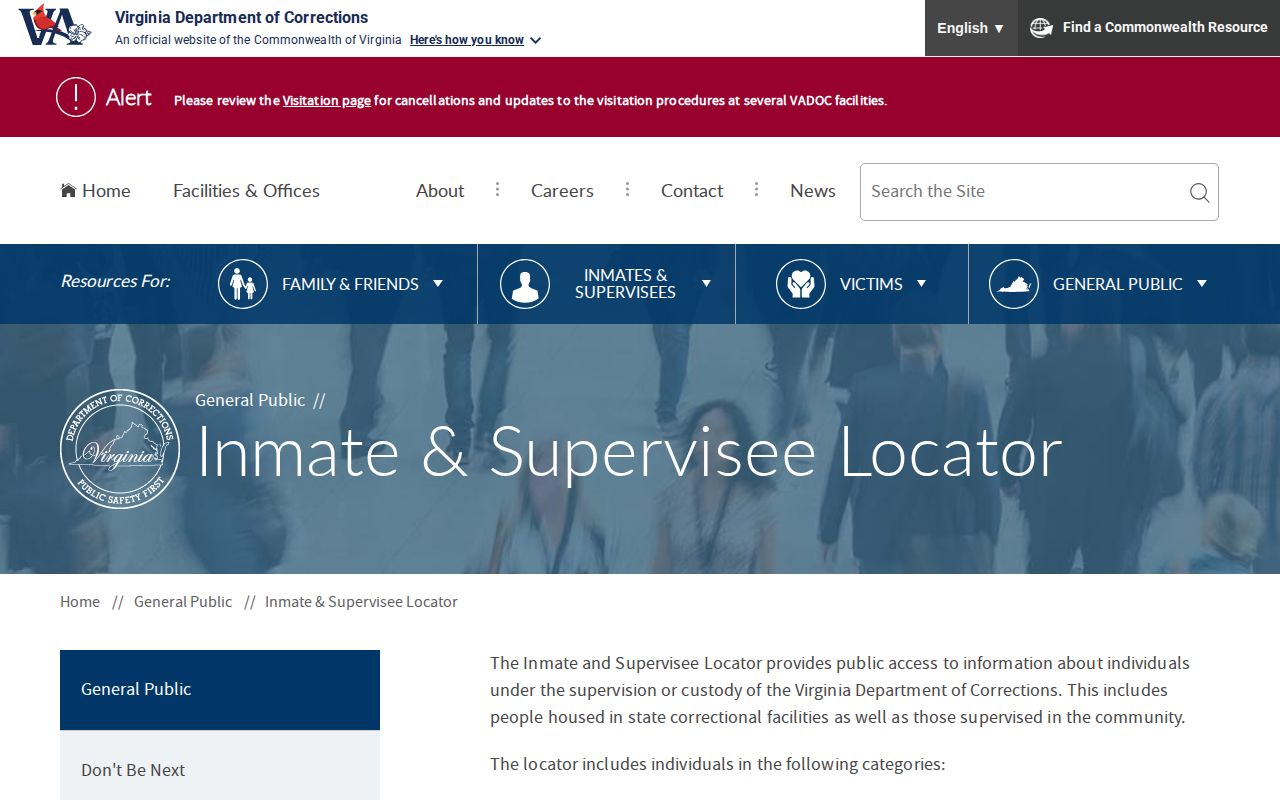
The result must still be matched to the correct person and read as current custody or supervision, not as a full release history.
Albemarle Probation Office Assignment
Charlottesville District 9 Probation and Parole is the local VADOC community-corrections office for Albemarle, Charlottesville, Fluvanna, Goochland, and Louisa. Its role is supervision, not jail booking or ACRJ release processing. A District 9 address in the locator supports that the person is in the community under supervision. It does not show that every sentence, fine, court condition, or registration duty has ended.
VADOC District 9 Probation and Parole750 Harris Street, Suite 202
Charlottesville, VA 22903
434-295-7194
VADOC facilities and offices directory
The office can route a procedural question and identify its service area. The person’s officer assignment and case information may be subject to limits. For a signed probation order or a revocation ruling, contact the court clerk instead.
The official office directory is the source for the current District 9 entry.
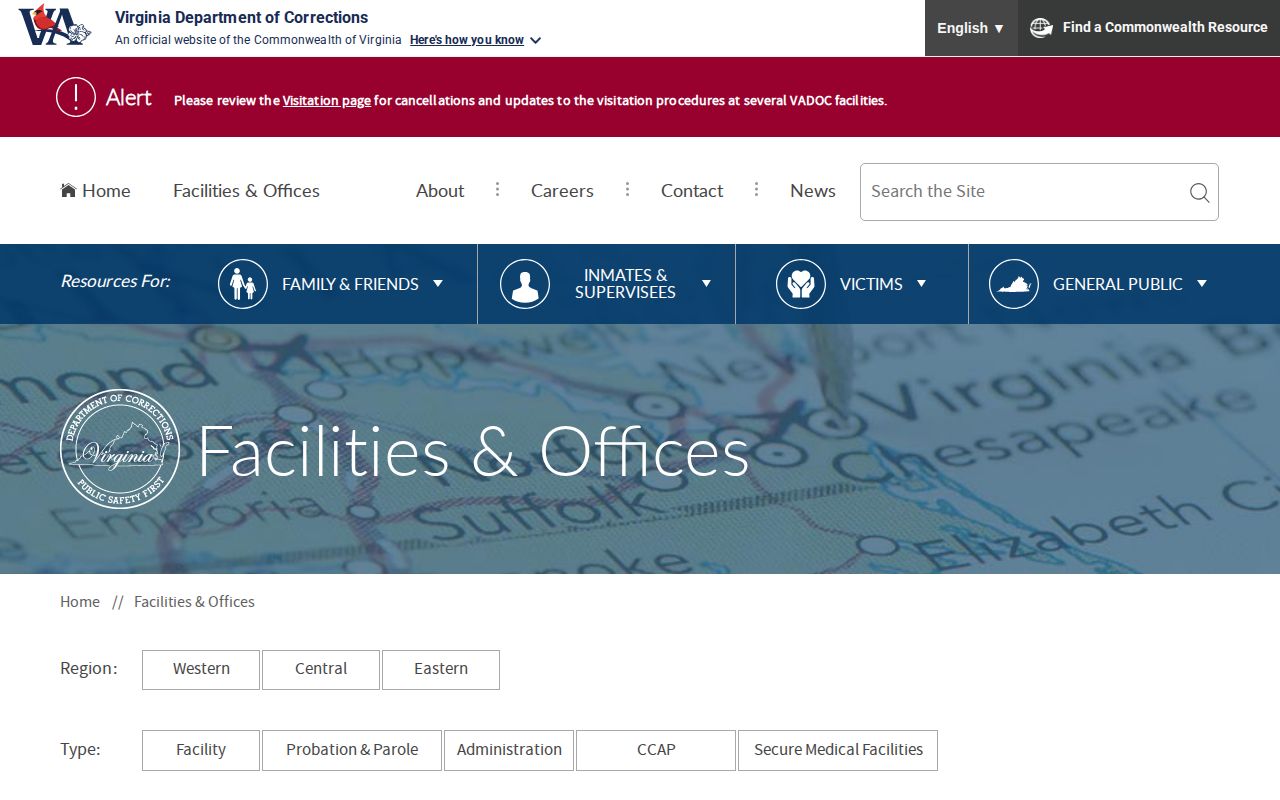
Check that directory before visiting because public office details can change.
Albemarle Parole Decision Records
For an eligible prison sentence, the Virginia Parole Board posts meeting materials and monthly decision reports. Its public-meetings page provides scheduled meeting details, agendas, links, and archived minutes. The monthly reports provide Board results. Individual reviews do not follow a simple public weekly calendar, and the Board states that not every eligible person receives a public meeting.
A grant, denial, and deferral mean different things. A grant can remain subject to release planning and may be suspended or rescinded. A denial means there was no parole release from that review. A deferral moves consideration forward. None is a gate timestamp. Confirm physical release through VADOC and active supervision through the locator.
Virginia generally limits traditional parole for offenses committed on or after January 1, 1995, while Va. Code §53.1-165.1 preserves defined exceptions. Eligibility depends on the offense, date, sentence, and other statutory rules. A Board report should not be treated as proof that an Albemarle person has left prison.
Note: A parole eligibility date, a Board grant, physical release, and final discharge are four separate points in the record.
Albemarle Supervision Violations
Conditions can require reporting, permission for travel, treatment, payment, testing, or compliance with a court order. The exact terms come from the signed probation, parole, or release documents. A violation allegation does not itself prove a new conviction or a return to custody. The supervising officer, court, and VADOC records answer different parts of that question.
An absconder is a person alleged to have stopped reporting or left supervision without approval. No comprehensive official Albemarle probation/parole absconder or warrant list was found. VADOC’s Most Wanted page is a separate escape and most-wanted channel, not a full warrant check. Absence from that page or from a locator result cannot clear a capias, warrant, detainer, or violation case. Search the relevant Albemarle court docket and ask District 9 about the correct verification route.
Virginia Jail VINE tracks participating jail custody events, not routine changes in probation or parole. A new jail event may show detention after an alleged violation, while the court docket records the hearing and ruling. Do not read a missing VINE result as proof that supervision is over.
Albemarle Reentry After Release
OAR/Jefferson Area Community Corrections provides a separate local handoff. Its staff work inside ACRJ on transition planning and offer post-release navigation from Charlottesville. Documented services include identification help, referrals, transportation aid, emergency food and clothing, and case management. OAR also operates Pretrial Services and local probation programs for eligible local cases.
This is support, not an official custody-status source. An OAR contact does not prove that ACRJ released someone, that VADOC supervision began, or that a sentence ended. Confirm the release through ACRJ or Virginia Jail VINE, then use OAR for practical reentry needs. The distinction avoids confusing a service relationship with state parole or probation.
OAR Charlottesville1218 Harris Street
Charlottesville, VA
434-296-2441
Monday–Thursday 8:30 a.m.–4:30 p.m.; Friday 7:30 a.m.–3:30 p.m.
OAR reentry services
The local reentry page documents the services and contact path.
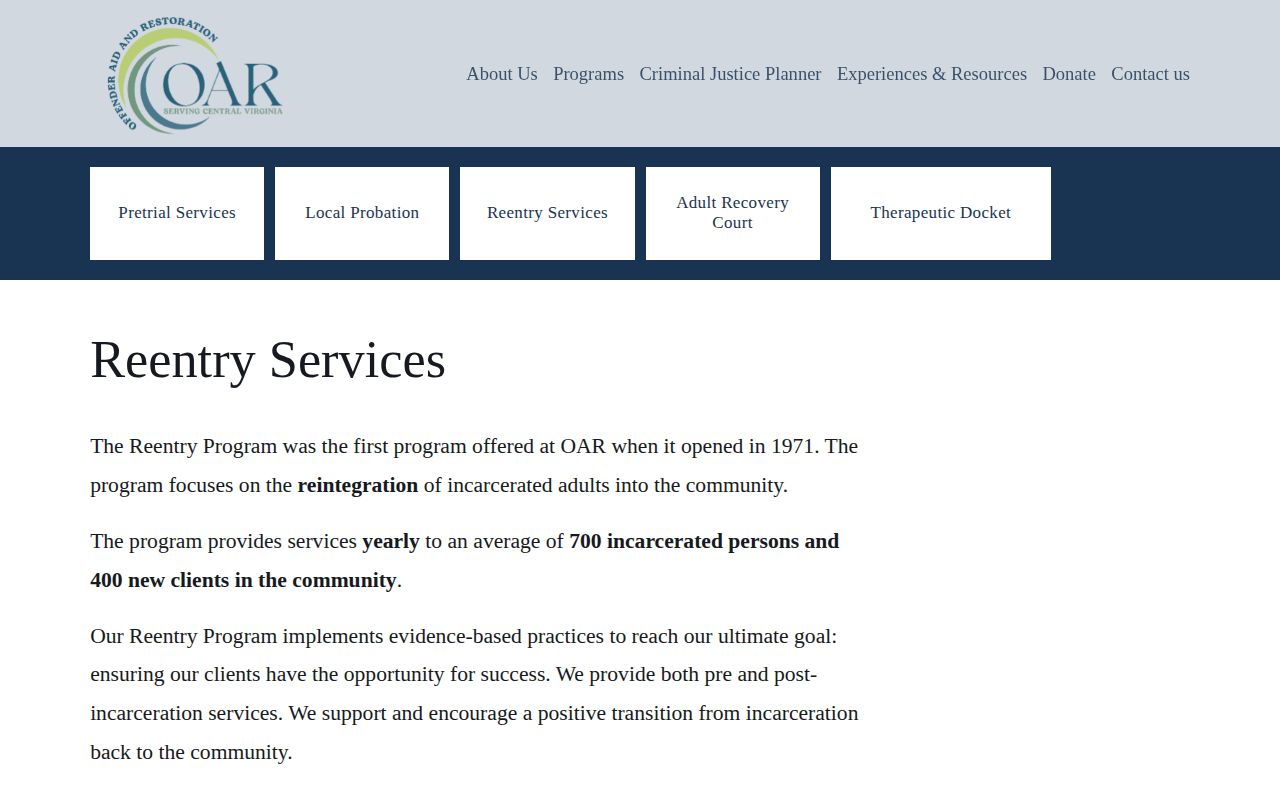
Those services can help with the first steps after release without replacing a VADOC or court status check.
Property After Albemarle Release
ACRJ has a specific property rule while a person is confined. The inmate must complete the full Inmate Property Release Form before money or property can be given to a named designee. Only that named recipient may receive the property, and the recipient must sign. That process should not be assumed to govern every final discharge.
The official property page does not publish a final-release pickup window, exit point, or abandoned-property procedure. A former inmate with an unresolved item should contact ACRJ, identify the booking episode, and ask for the current process. This question belongs with the jail, not District 9, even when parole or probation begins after release.
Ending Albemarle Community Supervision
Supervision ends through formal discharge, expiration, or another authorized court or agency action. Moving from prison to District 9 is release from incarceration, but it is not discharge from the sentence. A person may also return to court for a probation modification, revocation, or early termination decision. The signed order or VADOC record is stronger than an old locator screen.
If the VADOC result no longer appears, check the court case and request the applicable VADOC record. The locator is designed for current custody and supervision, not as a guaranteed permanent archive. Record the date of every live search, compare the person’s identifiers, and use the office that created the status for final confirmation.
When records conflict, match each source to its role. The Parole Board documents its own decision. VADOC documents custody, release, and state supervision. District 9 administers the local assignment. The Albemarle court records probation terms and later judicial action. ACRJ documents its own booking and exit. Keeping those roles separate prevents an old Board report, a jail disappearance, or a service-provider contact from being mistaken for a current discharge record.